AI for manufacturing quality

Your plant already has the data. FluxAI360 shows you what it means.

Machines, inspection systems and ERP record millions of data points every shift. FluxAI360 reads them, with no new hardware, and shows what drives your scrap, when a process is starting to drift, and the proof behind every part.

Inspection recordST-04 · LIVE
Part ID
PRT-24-118734-A
FAIL
burr · 0.94CAM-2 · 2448×2048 · ring light
Station
ST-04 Stamping
Timestamp
2026-10-14 09:42:17
Spec limits
rev S-17
Operator action
Advised, segregated
sealed · sha256 9f2c 41d7 e0b3 … a41e
Verify by QR
Process driftLINE 2 · 60 DAYS
Die 07 · burr height
0.372 mm USL 0.400
EARLY WARNING
Illustrative data · limit reached day 56
In production at a Fortune 500 connector manufacturerStarts on the data you already havePilot with an EHV transformer manufacturer200M+ data points analysed
The problem

The machines got precise. The proof didn't.

Presses, mills and lines hold tolerances that were unthinkable a decade ago. Yet the evidence that each part met spec is still gathered by hand, a few parts at a time, and filed on paper.

QC check sheet · Press 02 · Shift AForm QF-07
TimeSampledResultInit.
06:005OKR.
08:005OKR.
10:005OKS.
12:00—
14:0051 burr?S.
Between samplesnot inspected
Recordpaper, filed at end of shift
Illustrative
  1. 01
    Quality control is manual and sample-based.A handful of parts per shift stands in for thousands. Whatever happens between samples goes unseen.
  2. 02
    Escapes are expensive.A defect that leaves the plant comes back as scrap, rework, sorting at the customer and a formal complaint to answer.
  3. 03
    The proof lives in paper logs.When a customer asks for evidence on a specific part or lot, the answer takes days to assemble and is hard to trust.
The quality loop

One system from the first data point to the last 8D.

Collecting data changes nothing on its own. FluxAI360 closes the loop: it records what happened, helps you investigate what went wrong, and warns you before it happens again.

  1. 01

    Detect

    Every part checked against spec, using the data your machines already record. Cameras only where a defect needs them. It advises the operator by default, and can stop the line through your PLC when you want it to.

    Quality
  2. 02

    Record

    Each part gets a sealed inspection record against versioned spec limits, verifiable by your customer.

    Quality
  3. 03

    Investigate

    Find the measurements that drive scrap, and draft the 8D reply from your own data and past cases.

    Documents & Reports
  4. 04

    Prevent

    Early warning on tool wear and process drift, so maintenance happens when it is actually needed.

    Maintenance
Proven on real lines

Running in production, not in a lab.

FluxAI360 is in production at a Fortune 500 connector manufacturer. Sensor-free and capex-free: every result here was built on data the plant already produced.

200M+
data points analysed across production lines
85%
of all scrap traced to one measurement
95/92
recall / precision of a real-time model on that measurement, trained only on existing data
Weeks
of warning as die wear on stamping trended toward the spec limit
  • ProductionDowntime from inspection interlocks measured and explained, machine by machine.
  • Production8D complaint replies and daily summaries drafted from plant data.
  • ProductionVersioned spec limits and a sealed inspection record for every part.
  • Now integratingWeld process monitoring for anomalies in current and machine parameters.
Results

Three manufacturers. Three problems. Real numbers.

Anonymised, because our customers' data stays theirs. Every figure comes from real plant data.

Quality · Maintenance · Documents

A Fortune 500 connector manufacturer

One measurement sat behind 85% of all scrap.

  • A real-time model on it reaches 95% recall at 92% precision, trained only on measurements the plant already captured
  • Die wear trended to the spec limit with weeks of warning
  • Drawing cross-reference at 90%+ match confidence; an assistant over a 130,000+ SKU catalogue answers in about two seconds

Sensor-free and capex-free: built on data the plant already produced.
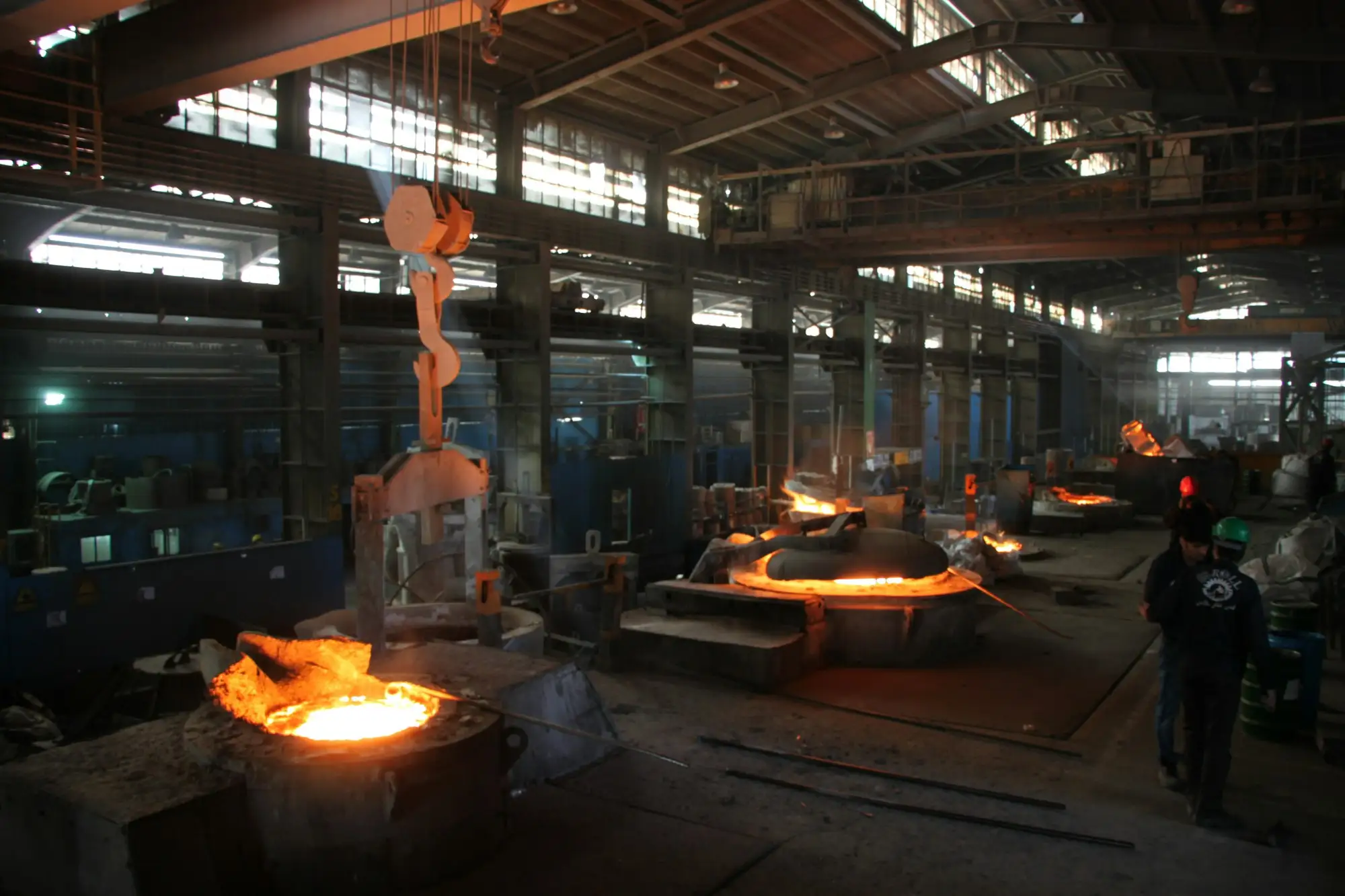
Planning · SAP S/4HANA

A hundred-year-old FMCG manufacturer

Demand forecasting that stopped flattening seasonality.

  • Forecasts keep the seasonal shape that spreadsheet formulas averaged away
  • Stock against requirement and stock-out visibility
  • Read-only through backend APIs; their SAP team accepted the approach

No change to how the ERP is run.

Documents · SAP

An integrated food-processing group

About 110 documents a day validated automatically.

  • Seven checkpoints across invoice, PO, GST, weighbridge and e-way bill
  • Mismatches go to an exception queue for review
  • Read-only SAP integration that writes back only the validation status

Checked against each other, not just read.

Assistant

Ask your plant a question. See the working.

Plain-language questions across quality, maintenance, planning and documents, answered from your own data with the sources and working shown.

How the platform fits together
Ask your plantLINE 2
Which press stopped most last week, and why?

Press 03 had the most stop time on Line 2. Most of it came from inspection interlocks on one station, clustered after the tool change on Tuesday.

  • Top causeInspection interlock, station ST-06
  • PatternBurr verdicts rose after the tool change
  • SuggestCheck punch condition on the next planned stop
Sourcesstoppage log · wk 41ST-06 inspection recordstool change record
Ask about quality, production or maintenance
Illustrative
How a pilot works

Paid, time-boxed, measured.

One use case, one agreed KPI, a fixed time box. If you continue, the pilot fee is credited to the first-year licence.

  1. Step 01

    Site survey

    We see the problem in person and check the data it needs, and the imaging only where vision is involved. We agree the use case, the KPI and the time box in writing.

  2. Step 02

    Connect

    Read-only access to the data the use case needs, from systems already on your line. Imaging is engineered only where vision is involved. Nothing replaced.

  3. Step 03

    Live on the line

    The use case runs on live plant data. It advises the operator by default, and can stop the line through your PLC when you want it to.

  4. Step 04

    Results review

    We review the agreed KPI against the data together. If you continue, the pilot fee is credited to the first-year licence.

Industries

Built for lines where an escape is expensive.

Different products, the same question from every customer: can you prove this part was good? These are the defects we are most often asked to catch.

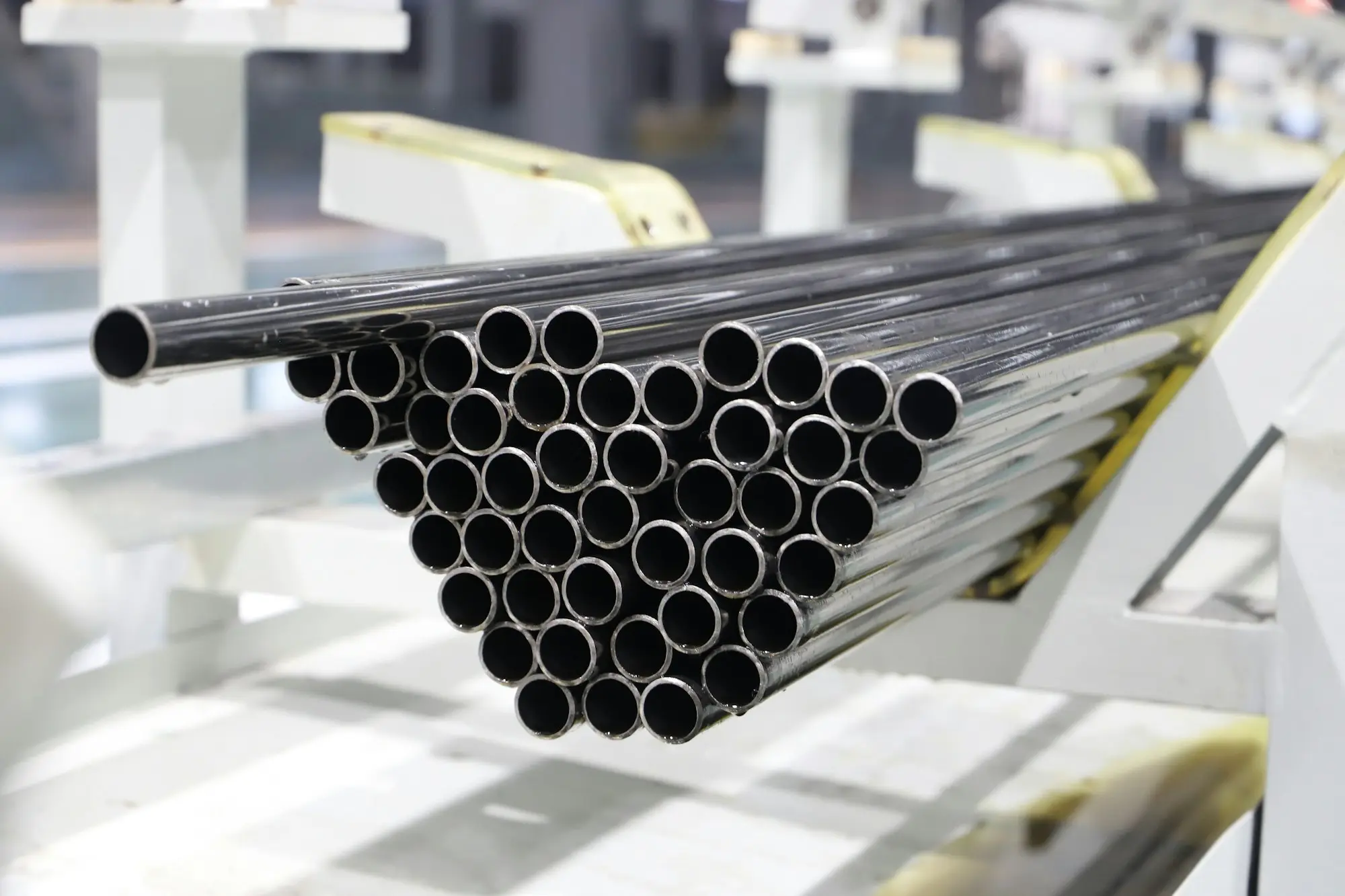
A bundle of polished steel pipes stacked on a finishing line

Metals & pipes

Long products, high throughput, surfaces that change with every heat and coil.

Use cases
Typical defects
  • Surface cracks, laps and seams
  • Scale, pitting and scratches
  • Ovality and dimensional drift
Security and deployment

Your plant, your data, your network.

FluxAI360 deploys on-premise or in your own cloud account. Quality data never has to leave the plant.

Security and deployment

On-premise or your cloud

Runs on a server in your plant or inside your own cloud account. You own the infrastructure.

Read-only by default

Any write-back, such as a line stop, is configured only where you ask for it.

No inbound access

No inbound internet connection is required. Nothing outside reaches into your OT network.

In-region data

Data stays in the plant, or in the cloud region you choose. Quality data never has to leave.

FAQ

Questions plant teams ask first.

Something else on your mind? Write to deepak@fluxai360.com.

Do you replace our existing vision system?

No. FluxAI360 works with the industrial cameras and inspection systems you already have. Where a station has no vision today, we engineer the imaging for it. Existing systems keep doing their job; we add the record, the trends and the investigation on top.

Where does our data live?

On a server in your plant, or in your own cloud account in your chosen region. Quality data never has to leave the plant.

How long does a pilot take?

A pilot is paid, covers one use case and is time-boxed, with one agreed KPI. The duration is fixed in writing after a site survey, so both sides know what success looks like and when it will be judged. If you continue, the pilot fee is credited to the first-year licence.

What hardware is needed?

None to start. FluxAI360 runs on the data your machines, inspection systems and ERP already produce, on a server in your plant or your own cloud account. Cameras, optics and lighting come in only where a defect cannot be seen in existing data, and we specify them after a site survey.

Do you work with system integrators?

Yes. We work alongside your integrator or machine builder for mounting, guarding and line integration, and stay responsible for the imaging, models and software.

Can it run without internet?

Yes. Everything runs inside your plant network. No inbound internet connection is required.

Can it stop the line?

It advises the operator by default, and can stop the line through your PLC when you want it to. Any write-back is configured only where you ask for it.

Start with one station

Tell us which defect costs you the most.

We will tell you honestly whether it can be imaged and inspected reliably, what a pilot would look like on your line, and what we would measure.